This interview was conducted on July 5, 2024 during the Deleuze and Guattari Studies Conference & Camp at the Faculty of Architecture and Built Environment of TU Delft. It explores alternative pedagogies at RMIT University in Melbourne, emphasising the significance of ‘idea-led design’ in the fields of architecture and interior design. The interview also reflects on the evolution of the Practice Research Symposium (PRS) and practice research PhDs at RMIT, focusing on the concepts and methods underlying research conducted through the medium of practice. Lastly, the discussants investigate how speculative approaches to thinking and practicing architecture intersect with the fields of curating, interior design, and exhibition design, as well as how these approaches can be integrated into academic teaching and research.
Suzie Attiwill was interviewed by Đorđe Bulajić
Portrait image by Emma Byrnes
Firstly, thank you, Suzie, for accepting my invitation to this interview. We are meeting here at the Deleuze and Guattari Studies Conference & Camp at TU Delft, which itself feels like an apt context for this kind of conversation.
Before we begin, as I mentioned in my earlier correspondence, in June my colleagues and I organized a workshop titled ‘Sensing–Intuiting–Imaging (SII)’ with MSc2 students at the Faculty of Architecture and the Built Environment at TU Delft. The workshop drew on Gilbert Simondon’s concept of the imagistic cycle, and its aim was to foster speculative and intuitive problematisations, develop new forms of sensitivity to the forces traversing architectural situations, and explore alternative methods for giving form to these potentials. In short, the workshop sought to develop innovative and open-ended approaches to thinking and practicing architecture—approaches in which disciplinary conventions become sites of genuine experimentation rather than parameters to be optimised.
With that context in mind, I would like to open our conversation by asking about pedagogical formats, since the question of how design is taught seems inseparable from the question of what design is and what it can do. Thinking about your trajectory at RMIT, where teaching and research appear intertwined, what formats of education do you find most productive and generative, both for students and for your own thinking? I am interested in the full range of possibilities: the design studio, the intensive workshop, the seminar, the lecture, but also perhaps formats that do not fit neatly into those established categories. What kinds of pedagogical environments allow ideas to genuinely take hold and produce new ways of thinking and doing?
Thank you for the invitation and introduction. The workshop ‘Sensing-Intuiting-Imaging (SII)’ sounds very interesting and seems to have many connections with my interests engaged through teaching and research situated in the discipline of interior design. It is worth noting at this moment in the interview that while I am in a School of Architecture and Urban Design, I do not teach in the architecture discipline and have not studied architecture. My commitment as an academic-practitioner is to interior design through a practice of designing and thinking where the question of interior is posed as a problematic – ?interior – as distinct from a question that seeks to answer: ‘what is interior?’.
?interior is a pick-up from Deleuze’s ?-being, which he invented to interrupt the dialectical relation of implication between being and non-being, and to refunction ‘being’ as a problematic: ‘There is a non-being which is by no means the being of the negative, but rather the being of the problematic’.1 I lost the hyphen between ? and interior—an oversight perhaps because of my focus on the question mark in an attempt to shift from the what question—interior?—which directs one to define and answer in a categorical and universal way. ?interior produces a pause and re-poses interior as a problematic for, and in, practice.
This praxis has been produced through experiments with exhibitions as relational dynamic environments of encounters and processes of individuation. It is useful to note this specificity as we head into our conversation as it may bring a different inflection.
However, to return to your question about formats of education that are helpful and effective. Design studios and intensives are places where one can engage students with ideas and problematics. Studios become laboratories for collective production through spatial, temporal and material experimentation; where ideas are explored through actual projects and learning becomes research and vice versa. The studios I offer are ‘partnered studios’ which means there is a partnership with external partners. Past studios include ‘Beyond Building’ (in partnership with the Australian Childhood Trauma Group), ‘Abacus: Inter~relational Diagrams’ (with Hannah Moriarty and in partnership with Abacus Learning Centre for pre-school autistic children) and ‘urban interiority’ (with the City of Melbourne during the time of the Covid pandemic). These partnered studios engage with a project that addresses a problematic and students can see the implication of particular ideas, approaches and connections in the production of the situation; and appreciate the potential of interior design as a practice engaged with spatial, temporal and material relations that transform situations.
As you observed, a pedagogical aspect across all disciplines in our school is referred to as ‘idea-led design’. It’s important to clarify that idea-led is not an approach where theory and practice are seen as separate and theory leads or comes before practice so much as understanding practice as a site where ideas are embedded and theory is experimented through practice. The term ‘venturous practice’ is one that has been used by colleagues in architecture to describe their approach. Coming back to the framing of this discussion, I think there may be an interesting discussion here in relation to ‘speculative design’.
Your description of ‘idea-led design’ brings me to the question of speculation, and to what is often framed as ‘speculative design’ or ‘speculative education’. How do you situate your own pedagogical approach in relation to this speculative turn? Is ‘idea-led design’ a form of speculation, or do you see important conceptual distinctions between the two—distinctions that matter not only terminologically but also in terms of what they enable in practice?
I tend not to use the term ‘speculative’ in my teaching and research for conceptual reasons. There is an implication of design as a future-thinking practice – and a designer posing ‘what if’ scenarios. In my teaching, research and practice I am more interested in working into/with current situations to pose ?interior. To come at this another way, through my interest in Deleuze and related thinking, I prefer the term ‘experimentation,’ which has a different orientation to ‘speculation’ and invites a different set-up for a way of working and thinking. There is something here also that speaks to interior designing as a practice that is always already working into existing situations. Jon Roffe, a philosopher who collaborated with me to develop an interior design theory course – Interior Design from the Inside Out 2 - suggested an interior designer is like Deleuze and Guattari’s artisan 3 i.e. the one that follows or begins in context, that works ‘inbetween’ other practices, and that produces new spaces that modify the forces of social striation rather than erasing them.
The distinction you draw between experimentation and speculation seems to me to have very direct implications for how we understand research through design. This brings me to what I consider one of the most significant and distinctive aspects of RMIT’s intellectual culture: its long-standing initiative in practice research, sustained and formalized through the Practice Research Symposium (PRS). What began as a relatively localized initiative has grown into a genuinely global program, held biannually across multiple continents - Asia, Europe, North America, and, of course, Australia.
I would love to hear more about your own relationship to this community: how practice research has shaped your thinking, what you see as its genuine strengths as a methodology, and where you sense tensions or unresolved difficulties. It would also be wonderful if you could offer a brief characterization of what practice research at RMIT distinctively entails, particularly for readers who may encounter it primarily through its outputs rather than through its process.
Practice research shares a similar ethos with design studio pedagogy as research is also practice-focused. The coupling of ‘practice research’ captures and expresses an approach that is distinguished from other practice-oriented research modes as there is no intermediating conjunctive such as ‘-based’, ‘-led’ etc. ‘Practice research’ is defined as research through the medium of design as distinct from ‘for’, ‘about’, ‘on’ design.
In the early 1980s, Professor Leon van Schaik – who at that time was dean of the School of Architecture – initiated a master’s program dedicated to practice research. He invited local architects with an esteemed practice to reflect on their practice. Since then, this program has expanded to become a PhD program referred to as the Practice Research Symposium and is held twice a year in Barcelona, Saigon, Manhattan and Melbourne.
A practice research PhD provides a space for the practitioner to think through and with their practice; the research is conducted through the medium of design and in the place where one practices. It is not topic-based, and neither is it aimed at explaining the practice. The emphasis is on surfacing the distinctive spatial intelligence that tacitly inheres in practice. Over the past 30 years, the practice research model has become more diverse as different praxis interests and positions find expression through candidates’ research – for example, the emphasis on self-reflection is recognised now as theoretical framing and is frequently challenged philosophically/theoretically.
With my interest in philosophy and specifically Deleuze as well as Guattari, Foucault and Grosz, the emphasis on reflective practice was problematic for me as a PhD candidate and implicated dominant ideas regarding interior and interiority. However, the affirmation of practice as the site of experimentation and foregrounding of ‘how?’ as distinct from ‘what?’ – not seeking solutions and answers but instead pursuing problematics – is for me significant and vital to the production of new ways of thinking and doing. I make a connection here between practice research and Deleuze’s concept of ‘practical philosophy’ in which the role of philosophy is re-posed as a concern with ‘what we do’ as distinct from explaining ‘what is’.4
There is something important that I notice you have not yet touched upon, and I think it deserves to be brought to the foreground, because for me it is one of the most conceptually interesting aspects of RMIT’s practice research PhD. I am referring to the exhibition that candidates prepare as a component of their final examination - not as a supplement to or illustration of the written dissertation, but as a distinct and non-reducible form of argument, evidence, and knowledge. In most academic traditions, the doctoral examination remains firmly within the regime of the written and the verbal, the thesis and its oral defence. This model, by placing an exhibition at the heart of the process, seems to assert something far bolder: that spatial, material, and artefactual practices constitute knowledge in their own right. Could you say more about how this examination through exhibition actually functions, and what it means for how knowledge is validated and communicated within the program?
The examination process involves a dissertation (a written account of the research between 30,000 and 55,000 words) which is sent to examiners in advance of an in-person examination that takes place in an exhibition where the candidate gives an hour-long verbal presentation and then takes questions of clarification from the examiners. The examination is held in front of a public audience. This event is audio- and video-recorded and together with the dissertation – once finalised post examination – becomes the durable record of the PhD available online via the RMIT Library.
The PhD exhibition is a counterpoint to the dissertation and the assumption that knowledge resides/must reside in the written word. As such the exhibition is not at the heart of the process but one of three modes of the transmission of knowledge – text, oral and artefact. The ‘PhD exhibition’ is not like a gallery exhibition so much as an ‘exhibit of practice’; it affirms and presents for examination the artefacts of practice as evidence.
I want to turn now to the multiplicity of practices that define your work, and I am aware that what I am about to propose is a compression of what could easily be several separate conversations. You are simultaneously a curator, an exhibition designer, an academic researcher, and a practitioner of interior architecture, and what seems most interesting is not simply that you hold these different roles at once, but that they appear to genuinely transform and inflect one another.
A practitioner of interior design! For me this is important. As distinct from interior architecture where interior is an adjective of architecture, interior design can be posed as a practice of interior designing. Design is both a noun and a verb. The term ‘interior design’ emphasises the practice as one of designing interior – hence my provocation of ?interior and as a how question as distinct from the what question of ‘interior?’ From this point of view, I understand interior architecture and interior decoration as outcomes of interior designing; I would also define architecture as an act of interior designing.
Thank you for that correction! With that clarification very much in mind, let me reframe my question: how do your practices of curating, exhibition design, and interior design feed into and shape each other - both in your own research and in how you teach? What does each mode of working make visible or possible that the others cannot, and how do you bring these insights into the context of academic pedagogy?
I do not see them as different modes so much as a practice of interior designing. For example, in the residential care project I’m currently working on, curatorial thinking plays a key role. I practice interior designing with a focus on arrangements and re-arrangements, encounters, signs, connections.
Before becoming an interior design academic, I had an independent practice as an exhibition designer and curator; and did a Master’s by research focusing on museums re-posed as spatial, temporal and material relations and arrangements. While I was commissioned to curate and design exhibitions by different galleries with various briefs, I also approached each as a laboratory for me to experiment with interior designing. Back in the mid-90s, when I started working as a curator, I was referred to as a 'spatial curator'. One of my first major commissions was an exhibition of craft and design. The concept I developed also became the title – ‘Spacecraft’. This set up the exhibition as an experiment in crafting space as well as the curatorial framework as one of selecting objects that were UFO-like i.e. unidentified flying objects. I sought to disrupt the exhibition format that aims to establish a relation between a subject and object as a relation of reception and communication, knowing and representation. Crafting space, I arranged the objects so that viewers became sensitive to movement both through space and how sightlines were produced; the curatorial approach emphasized spatial encounters.
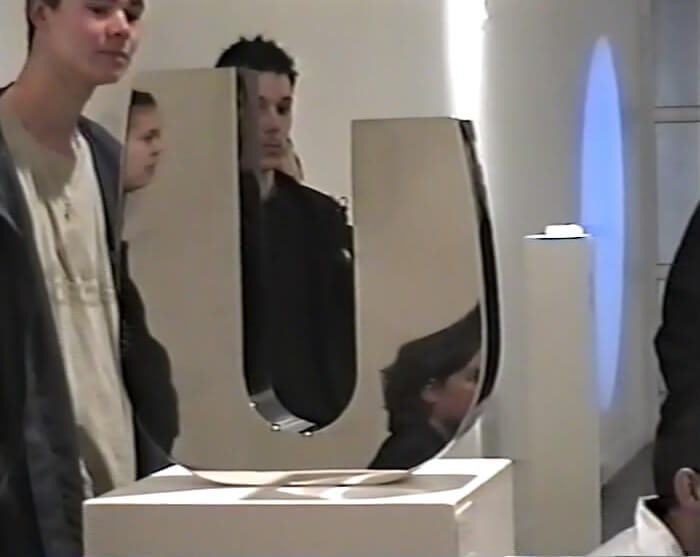
Image 1: Spacecraft 0701 2001. Photograph taken during exhibition floor talk by Suzie Attiwill
As laboratories for experimentation with making relations, the practices of exhibition making and curating engage students with critical aspects of interior designing – relations between people and environment, the power of these relations and arrangements, of arranging/re-arranging, etc. Further to this, exhibitions can be actualised at 1:1 scale as encounters as part of a studio project. I want students to appreciate how the techniques they are working with actually produce and shape different relationships in the world and how interior, interiority/subjectivity and space are concepts as distinct from natural self-givens. I also want them to grasp that space is not just a neutral container; that space is also a production and therefore, for them to apprehend the potential and potency of interior design as a relational practice.
In a 6-day intensive with undergraduate interior design students – called ?interior laboratory – we collectively worked with the concept of umwelt with reference to the Estonian biologist Jakob von Uexküll’s book A Foray Into the Worlds of Animals and Humans: With A Theory of Meaning (first published in 1934) – thinking about organisms and environment, perceptual cues, I-tones, ethology, the Outside, role of designer, practices of interiorization, perception, psychology, ambiance, and Erin Manning’s concept of autistic perception.
I want to return, in closing, to the question of speculative and experimental practices, and to ask you to consider where curating and exhibition design sit within that framework, now that we have established some sharper conceptual distinctions between speculation and experimentation. I am curious what you see as the genuine advantages of working through these mediums, not just pedagogically, but as modes of architectural and philosophical research. And equally, where do you sense its limitations? There must be things that exhibitions cannot do, or risks and distortions they introduce, that are worth naming honestly.
There are several advantages in working with exhibitions and curatorial practice as laboratories for experimentation with the areas of research and philosophical enquiry that I am interested in – specifically, techniques and making relations that confront the implications of concepts of subjects, objects and the individual as the site/producer of experience; and to expose space as a web of social, political, historical, regulatory relations etc. Exhibitions also enable an immediate engagement and encounter with complex ideas and propositions. The photograph below is an exhibition in a carpark in Nicosia, Cyprus. In 2016, I was invited as keynote and workshop leader for the International Master of Interior-Architectural Design project ‘Inhabiting Nicosia’ convened by ITU Istanbul and held in Nicosia, Cyprus. The workshop I developed and led Urban + Interiority: Propositions toward a new collective urban inhabitation, invited the master’s students to develop designs addressing this provocation in relation to the situation of a carpark located in the old city of Nicosia and north of the ‘UN buffer zone – the Green Line’, i.e. territory occupied by Türkiye since 1974. The design projects were exhibited on one of the carpark’s boundary walls. Children who lived in the area were invited to make design propositions and these also became part of the exhibition.
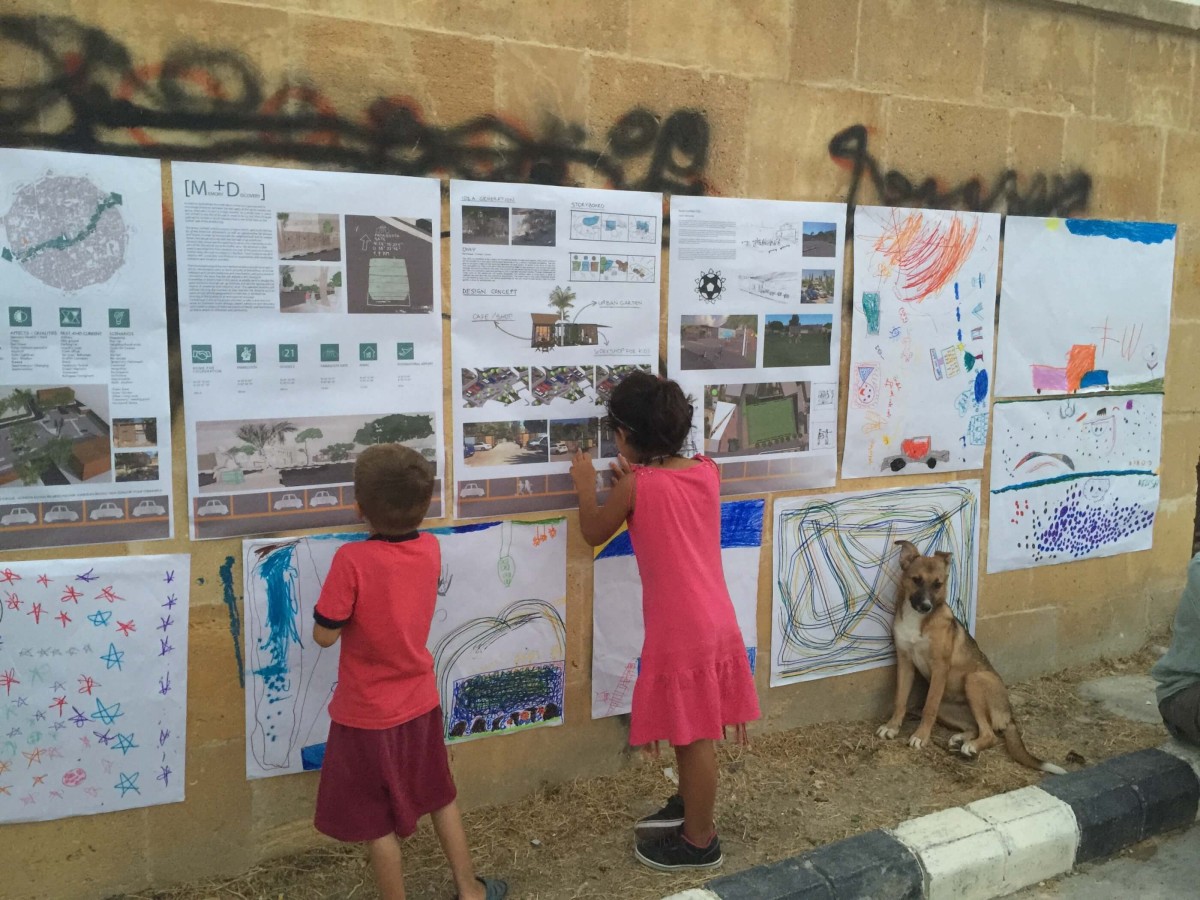
Image 2: Exhibition, Urban + Interiority: Propositions toward a new collective urban inhabitation, Nicosia, Cyprus, 2016. Photograph by Suzie Attiwill.
Probably the most important thing with thinking and designing exhibitions is how they bring a focus to relations and in particular relations involved with people and environments, and how this can be extended to interior designing in an expanded way. A critical issue here is thinking about relations ‘to’ and relations ‘in’. The International Federation of Interior Architects/Designers defines the identity of interior designers as practitioners who ‘determine the relationship of people to spaces based on psychological and physical parameters to improve the quality of life’.5 The relation ‘to’ expressed here has many implications including instantiating a subject/person as a priori and also that one is designing relations between. The distinction between thinking of relations ‘to’ something and relations ‘in’ is useful to think through interior designing as a difference between a practice that works with and asserts relations as existing between things and as relations ‘to’ – subjects and objects for example; and one situated in the midst of relations where interior and interiority are produced in, and productions of, the Outside.6
I agree, it's about designing complex, nonlinear relationships - rhizomatic in a Deleuzian and Guattarian sense.
I wonder though if it is about designing relationships. Even with an emphasis on complexity and nonlinearity, this framing resonates with the IFI definition of interior designer as someone who determines, i.e. designs the relationship between people and space. If we return to the discussion about relations ‘to’ and ‘in’ – and experiment with the latter as processes of individuation where the individual is understood ‘from the perspective of the process of individuation rather than the process of individuation by means of the individual’, then the focus shifts from beginning with subjects and objects and making relations to working in the midst of forces.7 Thinking ethologically – for example, von Uexküll writing about the spider-web-fly assemblage – it is not like the spider designed its web of relations to catch the fly.
I was also interviewing Gökhan Kodalak about the role of drawing as a mediator of theory and philosophy.8 When he writes, he simultaneously produces diagrammatic drawings alongside his text, not as illustrations of what the words already say, but as a parallel and sometimes antagonistic line of thought that challenges, distorts, and extends the textual argument. Drawing, in this sense, operates as its own mode of problematization.
What I find compelling about curating as a practice of thinking is that it works through an entirely different set of constraints and possibilities. Unlike drawing, which can remain a solitary act - produced anywhere, revised endlessly - an exhibition is always collective, always relational, always dependent on the collaboration of many different actors: artists, fabricators, technicians, institution staff and the architecture of the venue itself. In that sense, the process of making an exhibition is never purely a creative act in the romantic, individualist sense of the term; it is simultaneously an organisational and political process - a negotiation of interests, capacities, and constraints that the concept must be able to survive and be transformed by.
And then there is the question of the visitor: once an exhibition opens, it escapes the designer’s control entirely. You can stage encounters, produce conditions, structure sightlines, and calibrate densities and rhythms, but you cannot determine how someone will actually move through the space, what they will notice, what connections they will form, or what affects will be activated. In a Simondonian sense, perhaps this is the most interesting point: the exhibition is not experienced by a pre-formed subject who brings meaning to it from outside; rather, the encounter with the exhibition is itself a process of individuation, the visitor and the environment becoming together. This makes the flows of an exhibition ultimately undesignable.
Your description of an exhibition as a collaborative and organisational process could also be a description of interior design as it involves all these aspects. This offers insight into my practice and the discussion above.
Regarding the concerns you raise above, such as the impossibility of determining how someone moves through a space etc, these are ones that interior design students also have. I invite them to consider the ideas that are informing these concerns and how these are philosophical concepts rather than natural self-givens. For example, ‘experience’ is often understood as produced by the individual and leads to the insurmountable problem that it is impossible to know how someone else experiences. In interior design, phenomenology and psychology are assumed as givens and I am interested in bringing focus to this assumption as a conceptual/philosophical issue and show there are other ways of addressing this problem, for example, what if experience produces the subject?
There are other philosophical concepts for thinking about the visitor/individual/subject. Through doing my PhD, I came to appreciate that it is not about finding an answer to such a question as this then itself instantiates identity and stasis. Perhaps it is not a matter of posing the question – ‘what is the subject?’ – for example, whether it is subjective first-person experience or a process of individuation.
My proposition for interior designing highlights the concept of interior to pose ?interior each time anew. The focus then shifts to practice and questions of how as distinct from what. Roffe’s proposition of the interior designer as a Deleuzian and Guattarian artisan is useful here as the one who follows and where the focus is on existing context (as distinct from speculating a future). The interior designer/artisan‘s practice is as an intermediary or intercessor i.e. the work is always undertaken in relations with other kinds of work and other workers and artists; amid social, political, cultural, historical, regulatory forces. Posing ?interior, interior designing (and exhibition making) becomes a practice of interrupting existing striated space – for example the assumed sightlines and patterns of viewing you mention above – not to instantiate another space of designed relations that project something else, but to pause and open ?interior in an Outside of contingency and chance – to embrace indeterminacy and enable becomings.
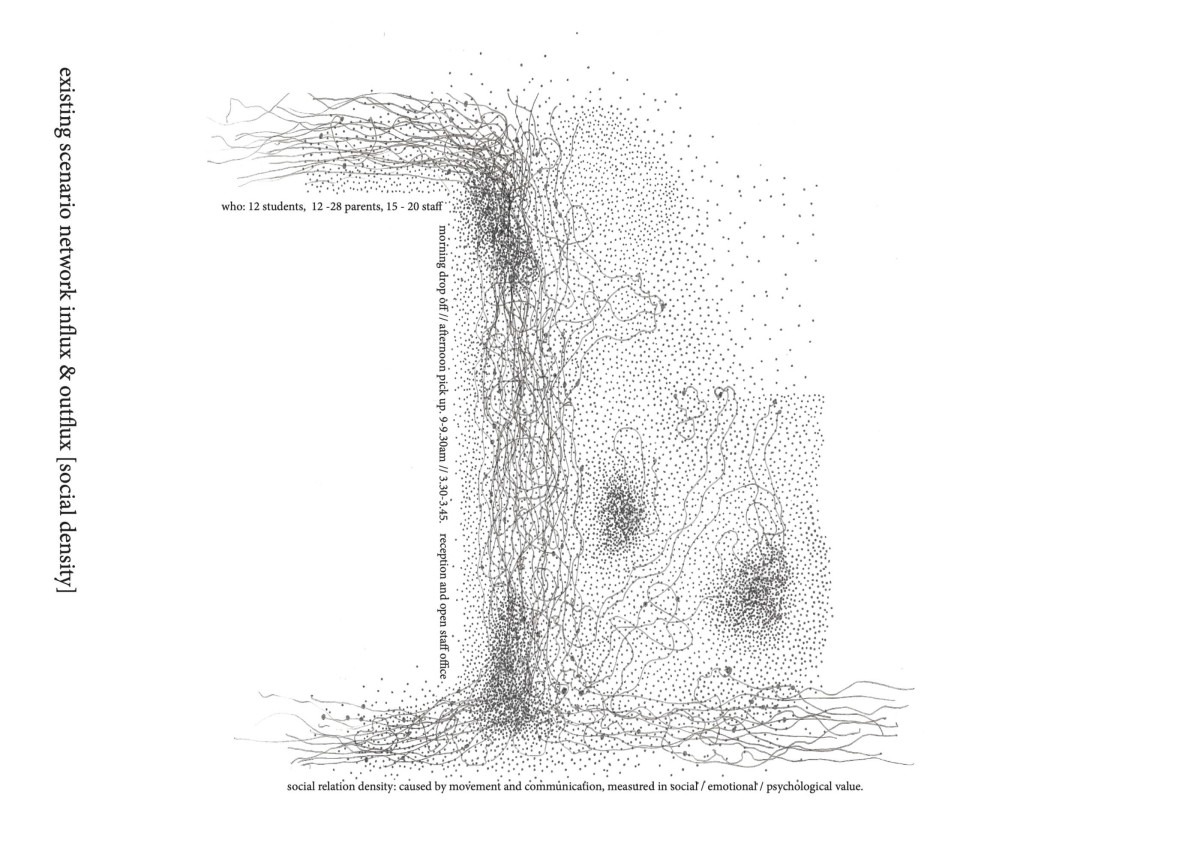
Image 3: Diagram, Eliza Solomon, Abacus Learning Centre community as an ecological network, identifying the socio-relational needs of the wider community.
Work produced as part of the undergraduate interior design studio Abacus: Inter~relational Diagrams, 2018. Eliza’s diagram was included in the exhibition Autistic Imaginaries of Architectural Space, Venice Architecture Biennale 2021.
- Gilles Deleuze, Difference and Repetition, trans. Paul Patton (Columbia University Press, 1994/1968), 220. ↩
- Jon Roffe, Interior Design from the Inside Out, an Interior Design Specialisation offered as part of the Bachelor of Interior Design (Honours) program at RMIT University, Melbourne from 2019 to 2022. ↩
- See Gilles Deleuze and Félix Guattari, A Thousand Plateaus: Capitalism and Schizophrenia, trans. Brian Massumi (University of Minnesota Press, 1987). ↩
- Gilles Deleuze, Spinoza: Practical Philosophy, trans. Robert Hurley (City Lights Books, 1988). ↩
- https://ifiworld.org/programs-events/interiors-declaration-adoptions/ accessed 10 July 2025 ↩
- Suzie Attiwill, ‘Outside-Interior: ?Interior’, in Aberrant Nuptials: Deleuze and Artistic Research 2, ed. Paulo de Assis and Paolo Giudici, Leuven University Press, 2019. ↩
- Gilbert Simondon, ‘The Genesis of the Individual’, in Incorporations, ed. Jonathan Crary and Sanford Kwinter, trans. Mark Cohen and Sanford Kwinter (Zone, 1992). 300. ↩
- Gökhan Kodalak is an architect, instructing architectural design studios at Parsons School of Design; a theorist, teaching philosophies of architecture, nature, and worldbuilding at Pratt Institute; and an architectural historian holding a Ph.D. from and lecturing specialized seminars on ethico-aesthetics at Cornell University. You can read the interview with Professor Kodalak on this link: (https://surfutures.eu/articles-and-interviews/gokhan-kodalak-interviewed-by-djordje-bulajic-on-the-speculative-in-architectural-education-and-drawing-as-an-active-mediator-of ) ↩